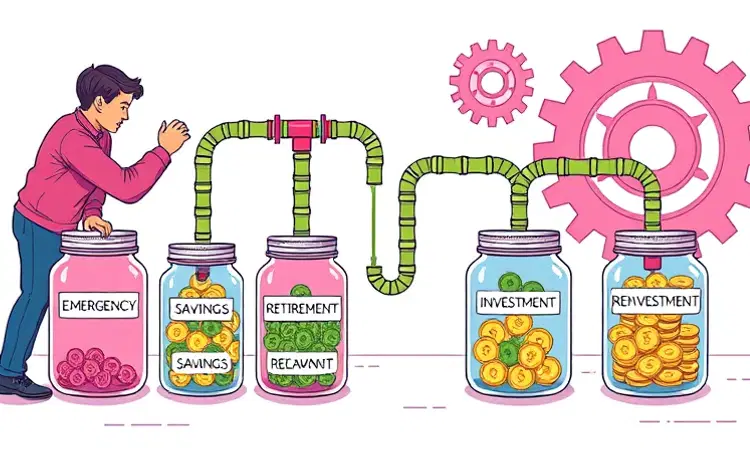
Many individuals intend to save and invest, yet struggle to translate good intentions into lasting progress. Historical data reveals a persistent gap between financial aspirations and real preparedness. Automation offers a structured approach to direct income into building a reserve, funding retirement, and growing long-term wealth without relying on daily decisions.
Bridging the Gap Between Goals and Preparedness
The Federal Reserve’s 2025 report on U.S. household well-being highlights a mixed outlook: while 63% of adults could handle a $400 emergency, only 55% maintain a three-month expense reserve. Even fewer, just 35% of non-retired adults, feel confident their retirement plan is on track. These figures do not guarantee that automation is the sole answer, but they illustrate a need to convert intentions into recurring actions through consistent, reliable systems.
By establishing an automatic reinvestment of dividends and interest, households can reinforce both their short-term safety net and their long-term growth trajectory. Automation minimizes the risk of emotional or impulsive decisions derailing progress and promotes a consistent saving and investing habit.
The core elements of a passive growth system include:
- An emergency reserve held in low-risk accounts
- Contributions to tax-advantaged retirement vehicles
- Diversified, low-cost market investments
- Automatic reinvestment of all returns
- Periodic portfolio reviews and rebalancing
This framework treats wealth accumulation as a process rather than a promise, emphasizing systems over perfect market timing.
Defining Passive Growth
Passive growth describes the gradual accumulation of wealth through regular contributions and compounding returns, where small actions taken consistently lead to substantial results over time. It relies on the power of compound interest, reinvested dividends, and asset appreciation, all orchestrated by an automated structure.
Importantly, “passive” refers to the minimal day-to-day decision making required after initial setup, not to the absence of risk. Market fluctuations, tax considerations, and ongoing monitoring remain essential responsibilities for any investor.
A Step-by-Step Automation Framework
Implementing passive growth requires a clear sequence of actions. This seven-step framework ensures comprehensive coverage of income, expenses, savings, investing, and adaptation:
- Measure: Analyze net income, fixed expenses, variable costs, debt payments, and existing savings.
- Protect: Build a three- to six-month emergency reserve in accessible, low-risk accounts.
- Automate: Schedule transfers immediately after each payday to savings and investment accounts.
- Invest: Capture employer matches, prioritize low-cost index funds and tax-advantaged accounts.
- Reinvest: Set up dividend and interest reinvestment to harness compounding automatically.
- Optimize: Compare debt costs with projected investment returns and adjust allocation.
- Review: Conduct periodic checkups to rebalance your portfolio and refine target allocations.
Step 1 begins with calculating a sustainable surplus: net income minus essential expenses, debt service, and planned annual costs. Automation should never create overdrafts or chronic shortfalls.
Step 2 focuses on building a three- to six-month emergency reserve equal to your essential expenses. This reserve secures long-term savings from being forced into untimely market sales.
Step 3 relies on allocating funds before discretionary spending through payroll splits or scheduled transfers. Routing money into separate accounts immediately after each deposit reinforces a consistent saving and investing habit without manual intervention.
Harnessing Compound Growth
Compound growth accelerates wealth accumulation as returns generate additional returns over time. By reinvesting dividends and interest, investors benefit from both new contributions and growth on prior gains. Setting this process on autopilot yields powerful results.
The future value of recurring contributions can be estimated with the standard future-value calculation formula:
FV = P × ((1 + r)^n – 1) / r, where P is the periodic investment, r the periodic rate of return, and n the number of contributions.
Illustrative growth at a 7% annual nominal return, compounded monthly, demonstrates the value of consistency:
These examples exclude taxes, fees, and inflation, and actual market performance can vary. Still, they underscore why time can matter as much as contribution amount.
Real Growth After Inflation
Nominal balances do not reflect purchasing power lost to inflation. The approximate real return can be calculated as (1 + nominal return)/(1 + inflation rate) – 1. For instance, a 7% nominal return with 3% inflation yields about a 3.88% real return.
By distinguishing between nominal and real growth, investors maintain realistic expectations and adjust contributions to meet long-term goals.
Conclusion
Automating your finances transforms saving and investing from occasional tasks into an ongoing, reliable system. By eliminating reliance on willpower alone and creating clear rules for allocating each paycheck, you build a foundation that can weather market cycles and life’s uncertainties.
Passive growth is not a guarantee of overnight riches, but a deliberate process that turns small, regular actions into significant wealth over decades. Starting today, measure your cash flow, protect your reserve, and set up automatic contributions. Then revisit and refine your system to stay on course.
Ultimately, the goal is to design a financial engine that works for you, capturing every opportunity to save, invest, reinvest, and adapt—without requiring constant effort or perfect timing.