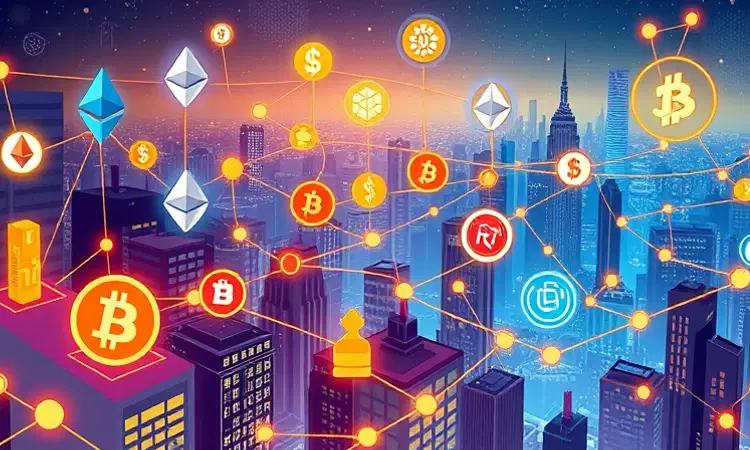
As the crypto landscape matures, investors are looking beyond Bitcoin to uncover innovative use cases and growth narratives. While Bitcoin remains the flagship asset, the altcoin universe presents a diverse set of cryptoassets designed for specialized functions. By understanding the unique value propositions, adoption metrics, and risk profiles of each ecosystem, investors can craft well-informed strategies that balance potential returns against liquidity, technology, regulatory, and security challenges.
Understanding the Altcoin Landscape
Altcoins encompass any digital asset outside of Bitcoin. They serve distinct roles, from smart-contract platforms to stable-value tokens. Treating all altcoins as cheaper alternatives to Bitcoin can lead to misguided investment decisions. Instead, classify altcoins by their core functions and tailor your evaluation criteria accordingly.
- Layer-1 networks: Ethereum, Solana, BNB Chain, Avalanche, Cardano
- Layer-2 solutions: Rollups and scaling systems on Ethereum
- Stablecoins: Fiat-pegged tokens like USDC, USDT, algorithmic variants
- DeFi tokens: Protocol assets linked to lending, exchanges, derivatives
- Infrastructure tokens: Oracles, storage, interoperability, decentralized computing
- Tokenized real-world assets: Protocols for Treasury bills, real estate, credit
- Meme and community tokens: Speculative assets driven by culture and attention
- Governance tokens: Voting rights over protocol parameters and treasury
Each category demands a unique investment thesis. For example, stablecoins rely on reserve backing and regulatory compliance, while governance tokens depend on protocol growth and community engagement.
Market Context in Late 2026
Entering late 2026, altcoins remain highly cyclical and volatile. Investors seeking higher beta may rotate into promising ecosystems, yet sudden deleveraging can trigger sharp declines. Market capitalization alone fails to capture nuances like revenue, decentralization, or sustainable demand.
Key metrics for deeper insight include trading volume, liquidity, token unlock schedules, circulating supply, protocol revenue, and user retention. A network with robust trading volume and liquidity offers more reliable entry and exit points, while tokens with front-loaded unlock schedules may face downward pressure.
Ethereum: The Settlement and Application Layer
Ethereum’s smart-contract functionality and extensive developer base solidify its position as the leading altcoin ecosystem. With approximately $55.6 billion in Layer-1 DeFi deposits—around 68% of global DeFi value—and a combined mainnet and Layer-2 value exceeding $80 billion, Ethereum remains the premier venue for decentralized finance and institutional experimentation.
Advantages include network effects and composability advantages, settlement credibility as a base layer for high-value transactions, and deep stablecoin liquidity. Estimates cite around 31,869 active Ethereum developers, more than any other network, reinforcing continuous innovation.
However, investors must assess whether Ethereum can capture sufficient value from transaction fees, staking, Layer-2 settlement, and institutional uses. Risks such as fragmentation across rollups, complexity for end users, and regulatory uncertainty around staking and token classification could dampen long-term token appreciation. Remember that strong network usage does not always translate directly into proportional ETH price gains.
Solana: High-Throughput Execution and Trading Activity
Solana offers a compelling alternative focused on throughput, low fees, and a unified execution environment. In April 2026, weekly decentralized-exchange volume on Solana reached approximately $11.49 billion versus $7.62 billion on Ethereum, illustrating its strength in high-frequency trading and automated market-making.
Solana’s stablecoin supply hit $15.6 billion in Q2 2026, representing about 5% of global stablecoin assets. Yet USDC’s share dropped from 77% in early 2025 to below 47%, demonstrating competition within major ecosystems and shifting market share among USDT, USD1, USDG, and PYUSD.
Investors should weigh Solana’s performance benefits against potential trade-offs: high validator hardware costs, historical congestion events, dependence on speculative trading, and token inflation schedules. While its fast settlement suits gaming, mobile, and payment applications, decentralization remains more limited compared to Ethereum.
Diverse Layer-1 Ecosystems
Beyond Ethereum and Solana, other Layer-1 networks illustrate alternative strategic approaches rather than interchangeable opportunities.
- BNB Chain: Low-cost transactions, strong retail distribution, but centralized governance linked to Binance.
- Avalanche: Customizable subnets for enterprise use cases, tokenization, and gaming, yet faces liquidity challenges.
- Cardano: Research-driven development and formal governance, but slower application adoption and lower on-chain activity.
- Cosmos and Interoperability Networks: Sovereign chains connected by bridges, offering cross-chain communication but facing fragmentation and security risks.
Evaluate each network on its own merits, focusing on developer activity, real-world use cases, and sustainable ecosystem growth rather than market hype.
Stablecoins: Bridging Crypto and the Real World
Stablecoins represent one of the clearest altcoin opportunities by linking blockchain infrastructure with payments, trading, remittances, and collateral. The total stablecoin market stood at $309.9 billion at the end of Q1 2026, slipping to $305.1 billion by Q2 2026.
- Fiat-backed stablecoins: Backed by cash, deposits, or short-term government securities, offering transparency and regulatory compliance.
- Crypto-collateralized stablecoins: Overcollateralized by digital assets, balancing decentralization with stability.
- Algorithmic stablecoins: Mechanically maintained pegs, but historically prone to failure and higher risk.
- Yield-bearing tokenized products: Combining stable-value exposure with returns from underlying Treasury or credit assets.
Growth drivers include expanding on-ramps in emerging markets, institutional treasury management, decentralized lending, and cross-border payments. Investors must scrutinize reserve audits, legal frameworks, and governance models to avoid undercollateralization and regulatory pitfalls.
Balancing Opportunity and Risk
Investing in altcoins requires a holistic framework that weighs potential upside against structural risks. Follow a disciplined approach:
- Define clear investment theses for each category—don’t generalize across all altcoins.
- Examine fundamental metrics: developer growth, protocol revenue, user retention, and lock-up schedules.
- Balance exposure across high-conviction ecosystems and stable-value assets to manage volatility.
By adopting prudent research and risk management, investors can navigate the staggering volatility and cyclicality risks inherent in altcoins. Focus on networks with real utility, sustained developer engagement, and transparent governance. With a clear thesis and robust due diligence, the altcoin landscape offers a spectrum of opportunities beyond Bitcoin’s store-of-value narrative.
Ultimately, success in altcoin investing stems from understanding that each token serves a distinct purpose. Whether you seek high-throughput execution, decentralized finance primitives, or stable-value instruments, align your strategy with the protocol’s core strengths and potential growth drivers. In doing so, you’ll position yourself to capitalize on innovation while safeguarding against downside risks in this dynamic market.