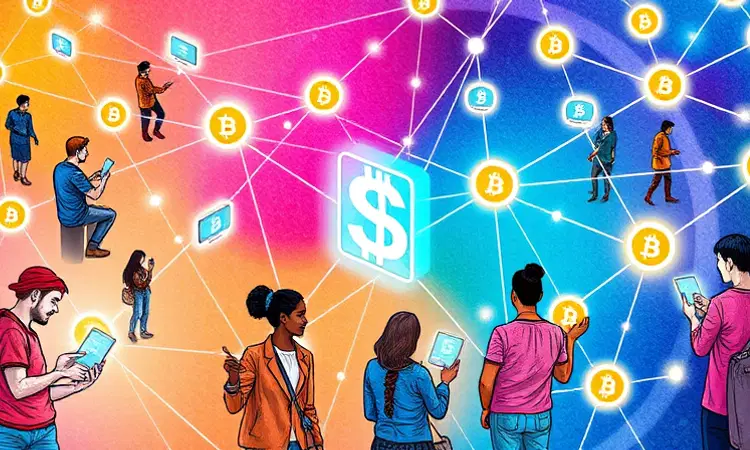
In an era where digital transformation reshapes industries, smart contracts and crypto assets have emerged as revolutionary tools to reimagine money, markets, and trust.
Decentralized finance, or DeFi, is not a single product or platform. It represents a broad ecosystem of protocols and decentralized applications—often called dApps—designed to deliver financial services without traditional intermediaries.
What Is Decentralized Finance?
At its core, DeFi leverages public, permissionless blockchains to execute financial operations through code rather than banks or clearinghouses. Users interact directly with open-source smart contracts—self-executing scripts on a blockchain—that hold and manage digital assets.
Although described as decentralized, each protocol varies in how much control lies with the community, developers, or external service providers. Four key characteristics distinguish DeFi from legacy systems:
- Non-custodial: users retain control of private keys and assets.
- Permissionless: anyone meeting technical requirements may participate.
- Transparent: contract code and transactions are publicly visible.
- Decentralized: governance power is distributed across stakeholders.
Why DeFi Matters
Traditional finance relies on institutions to match buyers and sellers, verify identities, manage collateral, and settle trades. DeFi replaces many of these functions with algorithms, liquidity pools, and automated protocols.
By removing gatekeepers, DeFi offers open access to financial services for anyone with a digital wallet. Participants can lend, borrow, trade, and earn yields without geographic or institutional barriers.
- Global availability: financial products accessible across borders.
- Programmability: complex transactions automated via code.
- Self-custody: users hold keys and control their funds.
- Composability: protocols integrate as building blocks.
- Transparency: on-chain visibility into flows and rules.
- Innovation: rapid experimentation with novel financial designs.
However, DeFi is not inherently superior. It introduces unique trade-offs between code reliance and autonomy, creating new risks alongside its benefits.
The Technology Behind DeFi
DeFi operates on a layered architecture. The settlement layer is provided by blockchains such as Ethereum, which held roughly $56 billion in TVL by March 2026 out of a global DeFi total near $98 billion. Other chains offer lower fees or higher throughput, creating a multichain landscape.
On top of settlement, smart contracts and governance mechanisms automate lending, trading, collateral management, and token issuance. These on-chain programs execute deterministically when predefined conditions are met, reducing human intervention.
Users access DeFi through wallets that manage private keys. Unlike bank accounts, losing a wallet’s keys often means irreversible loss of assets. This self-custodial control of funds demands rigorous security practices.
Tokens play diverse roles: as payment media, governance voting rights, collateral for loans, liquidity incentives, or synthetic asset representations. Stablecoins, for example, anchor values to external benchmarks like the US dollar.
Oracles bridge the gap between off-chain data and smart contracts. Reliable oracles feed price information for lending protocols and derivatives, but if manipulated, they can trigger unintended liquidations or asset mispricing.
Bridges connect separate blockchains, enabling cross-chain asset transfers. While essential for a cohesive DeFi ecosystem, bridges have been targets for exploits, highlighting the complexity and risk of cross-chain interactions.
Core DeFi Applications
Among the most transformative innovations are decentralized exchanges, or DEXs. Instead of order books, many DEXs use automated market makers (AMMs) to facilitate trades through liquidity pools.
- Liquidity providers deposit asset pairs into a pool.
- Traders swap tokens directly against the pool’s reserves.
- Prices adjust algorithmically based on supply and demand.
- Providers earn fees proportional to their share of the pool.
Lending and borrowing in DeFi typically use pooled funds rather than direct matches. Borrowers over-collateralize loans to protect the protocol against credit risk. Interest rates shift dynamically based on pool utilization.
Stablecoins maintain relative price stability and are vital to DeFi workflows. They serve as trading pairs, collateral, and settlement assets. Their design can vary:
Benefits and Risks
DeFi’s promise lies in rapid access and low friction for financial activities, often 24/7 and borderless. Yield opportunities can exceed traditional banking rates, and open protocols encourage innovation.
Yet smart-contract bugs, oracle failures, volatile collateral, front-running bots, and governance attacks pose significant hazards. Users must evaluate each protocol’s code audits, insurance coverage, and community governance health.
Getting Started with DeFi: Practical Steps
1. Choose a reputable self-custody wallet and secure your recovery phrase offline. 2. Research protocols with robust track records and audited contracts. 3. Start small to understand interfaces, fees, and gas costs. 4. Monitor positions regularly and diversify risk across platforms.
Educate yourself through community forums, official documentation, and testnet experimentation before committing substantial capital.
Looking Ahead: The Future of DeFi
As regulators refine frameworks and interoperability solutions mature, DeFi may bridge the gap between experimental protocols and mainstream finance. Multichain composability, secure layer-2 scaling, and decentralized identity could unlock new use cases from microcredit to tokenized real-world assets.
By balancing innovation with risk management, the DeFi ecosystem can evolve into a resilient, inclusive financial infrastructure—truly a gateway to the future of finance.