Securing the right loan can feel daunting when faced with a maze of numbers, rates, and fees. Yet with the right knowledge and strategy, borrowers can navigate today’s interest-rate environment and emerge with a deal that supports both short-term goals and long-term financial health.
Understanding the Current Interest Rate Landscape
As of September 2026, the Federal Reserve’s effective federal funds rate stood at 3.88%, while the bank prime loan rate hovered around 7.00%. These benchmarks ripple through the economy — influencing credit-card APRs, auto loans, home-equity lines, and more. When the Fed adjusts its policy rate, borrowers feel the impact in different ways, depending on whether debt is fixed-rate or variable.
While forecasts show rates potentially easing toward a longer-run level of 2.0%, it’s essential to remember that projections aren’t guarantees. waiting for a lower rate can backfire if prices rise or lending criteria tighten.
Interest Rate vs Annual Percentage Rate (APR)
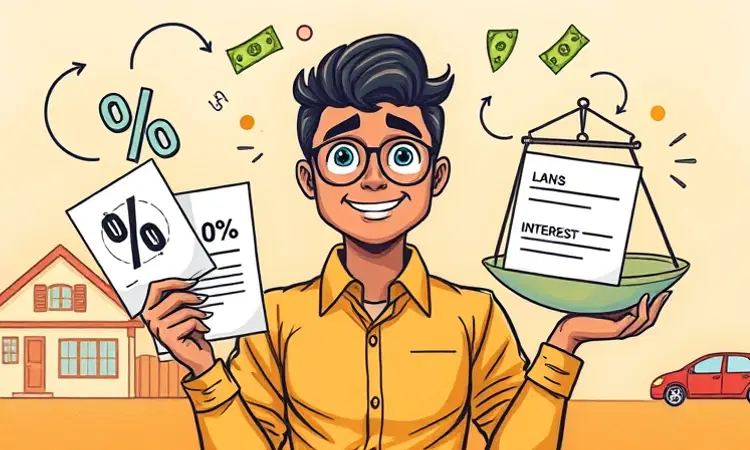
The advertised interest rate tells only part of the story. APR reflects the true yearly cost of borrowing by incorporating fees and charges alongside the base rate. The Consumer Financial Protection Bureau emphasizes that the annual percentage rate (APR) is crucial for apples-to-apples comparison when loan amounts and terms align.
Consider two hypothetical personal loans:
Loan A offers an 8.00% interest rate but carries hefty origination fees. Loan B has an 8.25% rate with minimal fees. Despite its higher sticker rate, Loan B may come with a lower APR and total cost. By focusing on APR, borrowers avoid surprises and ensure they’re comparing complete costs, not just headline rates.
Fixed vs Variable Rates
Choosing between fixed-rate and variable-rate debt hinges on your risk tolerance, budget certainty, and market outlook. fixed-rate loans offer predictable payments, shielding borrowers from future spikes, though they often start at a slightly higher interest point. Typical fixed products include 30-year mortgages, auto loans, and many personal loans.
Variable-rate loans, by contrast, adjust according to an underlying index plus a lender margin. Early rates can be lower, and borrowers may benefit if market rates decline. However, payments can rise, and future costs are uncertain. Common variable products include credit cards, home-equity lines, and some private student loans.
Factors That Influence Your Rate
No two borrowers are identical. Lenders assess a range of criteria to tailor your offer. By understanding these factors, you can take targeted steps to secure more favorable terms.
- Credit score and credit history
- Debt-to-income ratio
- Income stability and employment record
- Loan term and repayment schedule
- Down payment or collateral amount
- Fixed or variable rate structure
- Origination fees and points
- Type of lender (bank, credit union, online)
Improving any single factor can yield a better rate. For instance, improving your credit score quickly by paying down balances or correcting errors on your report can translate into measurable savings over the life of a loan.
Practical Tips for Securing the Best Loan Deal
With rates and fees laid out, borrowers can adopt an intentional approach to shopping and negotiating. A disciplined plan often pays dividends in lower overall costs.
- Compare APRs, not just interest rates
- Request quotes from multiple lenders
- Ask for fee waivers or reduced origination charges
- Use prequalification tools to lock in provisional rates
- Consider shorter terms if monthly budgets allow
- Evaluate fixed versus variable options for your risk comfort
- Leverage a co-signer or collateral to lower your rate
- negotiating with multiple lenders can uncover hidden savings
Even if you’re not ready to close immediately, you can still gather preliminary offers and improve your credit profile in the meantime. But if your need is urgent and terms are competitive, acting now may be wiser than hoping for future rate declines.
Bringing It All Together
Securing the best loan deal is both an art and a science. It demands a clear understanding of numbers, market trends, and personal finances. By focusing on APR and total costs, evaluating fixed versus variable structures, and addressing the factors within your control, you position yourself to borrow with confidence.
Whether you’re financing a home, car, education, or personal project, remember to keep an eye on the broader rate environment and your own financial health. With diligence, preparation, and strategic negotiation, you can transform a daunting process into an empowering step toward your goals. Always prioritize reviewing terms and conditions carefully before signing, and take pride in the smart choices that protect your future.