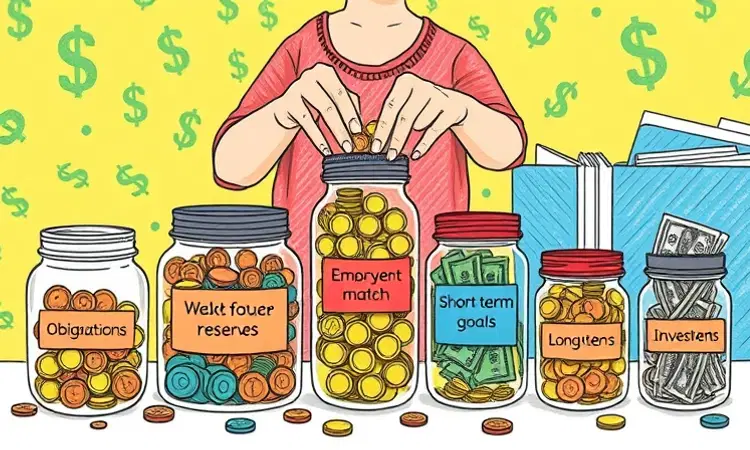
Saving isn’t just about cutting costs; it is a system for directing every dollar toward its highest-value use. By combining cash-flow management, automation, strategic debt repayment, emergency reserves, tax advantages, low-cost investing, consumer protection, and regular review, you can transform ordinary income into a powerful tool for financial freedom.
Define Maximizing Every Dollar
Maximizing money means assigning each dollar a clear purpose, matching it to the right risk, liquidity, tax treatment, and time horizon. It’s not always about chasing the highest yield; sometimes the best return lies in eliminating fees or avoiding interest.
Start by focusing on return on organization before chasing returns. Identify unnecessary fees, renegotiate recurring bills, automate transfers, and capture every employer match or tax break before pursuing higher-risk investments.
Take a Comprehensive Financial Snapshot
Before optimizing, you need a clear baseline. Gather income details, spending patterns, debts, and account balances to understand where your money originates and where it flows.
- Monthly take-home and irregular income
- Fixed and variable expenses
- Annual or irregular costs and account balances
- Interest rates, minimum debt payments, and employer benefits
- Short-, medium-, and long-term goals
Next, calculate net worth:
This baseline is not a judgement; it is a starting point to track progress over time.
Build a Cash-Flow System
Relying on willpower alone often leads to inconsistent saving. Instead, separate money immediately after payday according to purpose.
Suggested structure:
- Operating account for everyday spending
- Emergency savings account for unexpected costs
- Sinking funds for predictable irregular expenses
- Long-term investment accounts for retirement and growth
Automation sequence:
- Paycheck arrives
- Contribute to retirement and capture employer match
- Move funds to emergency and goal-based savings
- Reserve money for bills
- Use remaining funds for regular spending
This approach prevents saving only what’s left and reduces impulse decisions.
Use Goals and Sinking Funds
Assign each goal a specific amount, deadline, dedicated account, regular contribution, and review schedule. For lump-sum targets, use:
Monthly contribution = (Target amount – Current savings) / Months remaining
Create sinking funds for holidays, insurance premiums, vehicle maintenance, home repairs, or any predictable cost. This prevents surprises and avoids credit-card debt.
Create an Emergency Fund in Stages
An emergency fund covers genuine crises, not routine spending. Build it gradually with milestones:
- Starter buffer for small bills
- One month of essential expenses
- Three to six months of essentials
- Larger reserve for volatile income or special circumstances
Keep this money in safe, liquid vehicles like federally insured or high-yield savings accounts. Use it for job loss, medical emergencies, urgent repairs, or critical family needs, then replenish after each use.
Balancing Saving, Debt Repayment, and Investing
Compare the guaranteed savings from debt repayment with the uncertain returns from investing. A common priority sequence is:
- Cover required minimum debt payments
- Build a starter emergency reserve
- Contribute enough to obtain full employer retirement match
- Pay down high-interest revolving debt
- Increase emergency reserves toward target
- Save for near-term goals
- Accelerate retirement and long-term investing
- Make additional low-interest debt payments as desired
Debt repayment methods:
Avalanche method targets highest interest debts first, minimizing total interest. Snowball method focuses on smallest balances first, building motivation through quick wins.
The best method is the one you can execute consistently.
Protect and Periodically Optimize
Regularly review your system to adapt to life changes, interest-rate shifts, or tax-law updates. Incorporate consumer protection by checking credit reports and insurance coverage.
Every six to twelve months:
- Audit recurring charges and adjust budgets
- Confirm employer benefits and tax-advantaged accounts are maximized
- Rebalance investment portfolios toward target asset allocation
- Increase savings rate as income grows
By combining automation, clear goals, and periodic review, you build a resilient system that adapts to your changing needs while ensuring every dollar works at its highest value.
Conclusion
The Smart Saver’s Toolkit transforms saving from an afterthought into a disciplined, purpose-driven process. By aligning each dollar with its optimal use—whether covering essentials, capturing benefits, building reserves, eliminating debt, or investing for the future—you create a robust financial engine. Embrace this toolkit to direct your resources toward lasting security and growth.