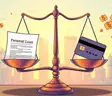
Personal loans can provide vital financial support when you need funds for emergencies, home improvements or consolidating debt. Yet, without a clear plan, even a well-approved loan can strain your wallet.
By treating each loan payment as a fixed, recurring budget obligation, you can build a sustainable repayment strategy that safeguards your essentials, future goals and peace of mind.
Before diving into repayment, it’s critical to see the full picture of your loan, income and monthly commitments. This comprehensive approach turns uncertainty into confidence.
Understanding Your Personal Loan
Personal loans are generally installment loans: you borrow a lump sum and repay it over a set term. Each monthly payment typically includes:
- Principal: the portion reducing your debt balance
- Interest: the lender’s charge for providing credit
- Fees: origination, late-payment or returned-payment charges
Unlike revolving credit, installment loans follow a fixed schedule. However, an approved loan isn’t inherently affordable—your budget must sustain it.
Gathering Complete Loan Information
Collect every detail from your loan agreement, statements and online portal. Record the following:
- Original and current outstanding principal
- Annual Percentage Rate (APR) and rate type
- Required monthly payment and due date
- Remaining number of payments and maturity date
- All fees: origination, late-payment, returned-payment
- Prepayment penalties and principal application rules
- Autopay settings and potential interest discounts
- Lender hardship options and contact information
Focusing on APR rather than the nominal rate gives a clearer picture of your total borrowing cost.
Building a Personal Loan Inventory
List every debt—personal loans, credit cards, auto or student loans—in one worksheet. Note current status: current, past due, in deferment or in collections. A table can simplify this overview:
This consolidated view prevents surprises and helps prioritize payments strategically.
Calculating Your Real Monthly Cash Flow
Work with net income, not gross. Deduct taxes, insurance premiums and retirement contributions before budgeting. Use a conservative baseline for irregular pay.
The core formula is:
Available cash flow = net income – essential expenses – minimum debt payments
Essential expenses typically include:
- Housing and utilities
- Food and transportation
- Insurance and healthcare
- Childcare and necessary work costs
- Taxes and minimum debt payments
If your result is negative, avoid extra principal payments. Instead, reduce expenses, increase income or explore loan restructuring.
Using Debt-to-Income Ratio to Gauge Affordability
Debt-to-income (DTI) ratio compares your gross monthly debt obligations to pre-tax income:
DTI = (monthly debt payments ÷ gross income) × 100
Include payments for:
- Personal, auto and student loans
- Credit-card minimums
- Mortgage or rent where applicable
- Court-ordered obligations
DTI helps compare obligations, but real-world household affordability depends on actual take-home pay and living costs. Don’t rely solely on a single percentage threshold.
Crafting a Resilient Budget That Works
A well-structured budget needs margin for irregular costs—not just mathematical balance. Consider an example:
Net income: $4,500
Essential outflows:
- Housing & utilities: $1,650
- Food: $600
- Transportation: $500
- Insurance & healthcare: $350
- Childcare & family essentials: $400
- Other necessary expenses: $300
- Personal-loan payment: $450
- Other debt minimums: $250
The zero-dollar margin leaves no buffer for emergencies or savings. Instead, adjust discretionary spending, build an emergency reserve and consider legitimate restructuring to create financial breathing room.
Demystifying the Payment Formula
Your fixed-rate loan payment follows this formula:
M = P × [r(1+r)n] ÷ [(1+r)n–1]
Where P is the principal, r the monthly rate and n the total payments. For example, a $10,000 loan at 12% APR over 36 months yields a payment around $332. A longer term of 60 months reduces each payment to about $222 but increases total interest.
Strategies for Staying on Track
Consistency is key to avoiding costly late fees and delinquency. Adopt these tactics:
- Set up autopay for on-time, uninterrupted payments.
- Maintain an emergency fund to cover unexpected shortfalls.
- Review your budget monthly and adjust for income changes.
- Communicate early with lenders about hardship options.
Embracing a Mindset of Financial Resilience
Managing personal loan payments isn’t just about numbers—it’s about empowerment. By building a proactive repayment plan and crafting a budget with cushion, you forge stability that supports goals, dreams and peace of mind.
Take control today: inventory your debts, calculate your real cash flow and commit to a budget that uplifts rather than restricts. With diligence and the right tools, you can turn a personal loan from a stressor into a stepping stone toward lasting financial well-being.