Every month, millions of Americans awaken to the stress of juggling credit-card bills, medical statements, and store-card notices. The constant stream of due dates and rising interest can feel like an unending treadmill of payments. This burden often triggers sleepless nights and constant worry, undermining both financial health and peace of mind.
In the second quarter of 2026, U.S. households carried approximately $18.8 trillion in total debt. Revolving balances on credit cards climbed by $21 billion, pushing totals near $1.28 trillion. At typical APRs exceeding 20%, these debts can grow faster than borrowers can repay them, creating a cycle of interest that seems impossible to escape.
Yet there is a path forward. A well-structured personal debt-consolidation loan can replace multiple high-interest accounts with one predictable monthly payment, potentially reducing interest costs and simplifying repayment. This strategy does not erase debt—it restructures it with a clearer timeline, a fixed interest rate, and an end date—provided the new loan’s total cost is lower, no new debt is taken on, and the term fits the borrower’s budget.
What Debt Consolidation Means
At its core, debt consolidation is the process of combining multiple debts into one account. A lender issues a single personal loan that is used to pay off eligible debts, transforming a suite of minimum payments into a fixed installment plan.
- Credit-card balances
- Store-card balances
- Medical bills and other unsecured personal debts
- Existing personal loans in some cases
The result is one streamlined payment schedule, typically spanning two to seven years. By converting revolving balances into an amortizing loan, borrowers gain clarity and a defined payoff date.
How the Consolidation Process Works
While the concept is simple, success depends on careful planning and follow-through:
1. Inventory all debts. Create a detailed list of each balance, APR, minimum payment, payoff amount, and due date.
2. Check credit and income. Lenders evaluate credit history, credit score, income stability, existing debts, and debt-to-income ratio to determine eligibility and pricing.
3. Compare loan offers. Look beyond the headline APR. Compare origination fees, loan term, monthly payment, total repayment amount, prepayment policies, and whether the lender pays creditors directly.
4. Apply for the loan. A soft inquiry may allow prequalification. A subsequent hard inquiry follows once the full application is submitted.
5. Use the proceeds. Funds are deposited into your account or sent directly to creditors. Ensure each debt is paid in full, including residual interest.
6. Verify account closures. Confirm that each creditor reports a zero balance and close or monitor old accounts to prevent accidental charges or autopayments.
7. Repay on schedule. Make consistent, on-time payments to build a positive payment history and avoid late fees.
8. Prevent new debt. Stick to a budget and resist the temptation to use paid-off cards, or you risk undoing your progress.
Understanding the Financial Mechanics
Before proceeding, borrowers must weigh the true costs. A lower monthly payment can be enticing, but lower payment does not automatically mean a cheaper loan. Extending the term reduces monthly obligations while increasing total interest paid.
Key factors for comparison include:
- Current total interest cost
- New loan’s interest cost and fees
- Loan term and total amount repaid
- Impact on monthly cash flow
Consider this illustrative example:
This example is illustrative only and does not represent a guaranteed offer. Individual outcomes vary based on balances, rates, and fees.
When Consolidation May Make Sense
Debt consolidation can be a smart financial move when:
- New APR is meaningfully below existing rates
- Borrower has stable, verifiable income
- Proposed payment fits comfortably within budget
- No essential collateral is required
- Loan term aligns with payoff objectives
- Fees are reasonable relative to savings
- A plan exists to avoid new debt
- Fixed payment and end date are valued
Under these conditions, consolidation offers clear payoff timelines and can accelerate principal reduction.
When Consolidation May Not Make Sense
However, consolidation is not a one-size-fits-all solution. Avoid it if:
- New APR equals or exceeds old rates
- Borrower’s credit score yields a costly loan
- Origination fees negate potential savings
- Extended term significantly raises total interest
- Borrower has unstable or unpredictable income
- Paid-off cards are likely to be recharged
- Loan requires risk to essential assets
- Underlying budget issues remain unaddressed
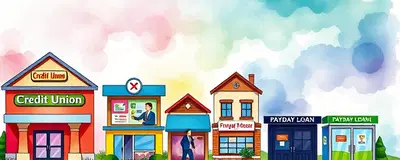
In such cases, consider alternative strategies like nonprofit credit counseling, negotiating directly with creditors, or seeking hardship programs.
Advantages of a Consolidation Loan
A well-chosen consolidation loan can:
Simplify monthly budgeting with one fixed payment.
Provide a defined payoff date, avoiding the open-ended nature of revolving credit.
Offer potential interest savings when the APR is lower than existing debts.
Reduce credit utilization, which may support a healthier credit score if accounts remain open and used responsibly.
Risks and Considerations
Potential drawbacks include:
Origination fees and hidden costs that can erode or eliminate savings.
Longer terms that increase total interest, despite lower monthly payments.
Credit inquiries and account closures that may temporarily affect your credit score.
The danger of returning to old spending habits, creating a new cycle of debt.
Making a Thoughtful Decision
Debt consolidation can unlock a path to financial stability, but it demands discipline and foresight. Before you proceed, take these steps:
- Calculate and compare total costs using real loan estimates.
- Ensure the new payment fits comfortably in your budget.
- Commit to a spending plan that prevents future revolving balances.
Seek advice from trusted financial advisors or nonprofit credit counselors if you need guidance. With a strategic approach, combining multiple debts into one can transform a chaotic repayment puzzle into a clear road toward freedom from debt.