Traditional banks are just one avenue for securing funds. Today’s borrowers can choose from a diverse spectrum of personal-credit sources designed to match their unique circumstances.
Why Borrowers Look Beyond Traditional Banks
Many consumers encounter obstacles at conventional banks: low credit scores, irregular income from self-employment, or the need for small-dollar loans that aren’t profitable for large institutions. In emergencies—medical bills, urgent repairs, or rent—borrowers often require rapid access to cash. Others seek more flexible underwriting standards or have recently faced a bank rejection.
However, easier approval does not mean cheaper credit. Alternative lenders balance risk with higher APRs, origination fees, automatic withdrawals, or collateral requirements. State licensing, eligibility rules, and consumer protections vary widely across the United States.
Credit Unions
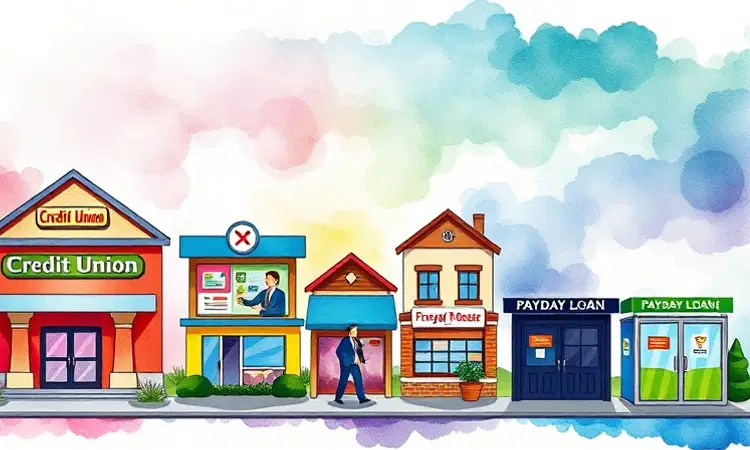
Credit unions are member-owned financial cooperatives that often deliver lower rates and personalized service.
- Potentially lower interest rates than payday or many online lenders
- Credit-builder and small-dollar loans to establish payment history
- Financial counseling and budgeting assistance available
- Personal underwriting for existing members
Limitations include membership requirements, variable product offerings by institution, and slower funding than some fintech platforms. Loan approval still depends on income, debt levels, and repayment capacity.
Specialized Payday Alternative Loans (PALs) from federal credit unions cap fees and interest, offering a regulated short-term solution. Eligibility, membership, loan size, and repeat-borrowing rules vary by program. Borrowers should compare total dollar costs, not just the stated rate, against other options.
Online and Fintech Lenders
Online lenders—ranging from digital banks to nonbank finance firms—use automated underwriting and rapid funding. Many consider cash-flow data alongside traditional credit scores.
- Actual lender or lead generator: verify who holds your loan
- State licensing and compliance in your jurisdiction
- APR, origination, late-payment, and NSF fees
- Credit bureau reporting: all, some, or none
- Prepayment penalties and fixed vs. variable rates
Borrowers should guard against aggressive marketing, automatic withdrawals that may trigger overdrafts, and the lure of fast funding without evaluating affordability.
Peer-to-Peer Lending
Peer-to-peer platforms connect individuals or institutions with borrowers, handling underwriting, servicing, and payments. While they offer tiered risk-based pricing and fixed-rate installment loans, APRs still heavily depend on credit and income profiles.
Origination or servicing fees may reduce funds received. Investor demand can affect approval and timing. A prequalification offer is not guaranteed funding, and the loan may be sold or transferred—though the borrower remains liable.
Employer-Based Loans and Salary Advances
Some employers provide emergency loans, payroll advances, or earned-wage-access programs. These initiatives can serve workers with limited credit history and deliver funds via paycheck deductions.
Key distinctions:
Employer loans are formal debts with interest or fees, while payroll advances recover funds from future wages. Earned-wage-access services may charge transaction or expedited-transfer fees without traditional loan structures.
Borrowers must understand how leaving a job affects repayment, whether the advance reports to credit bureaus, and any fees for expedited transfers.
Nonprofit and Community Lenders
Community Development Financial Institutions (CDFIs), mission-based nonprofits, and local assistance programs offer small-dollar loans or grants with flexible underwriting and lower costs than payday products.
They often provide financial coaching and budgeting support but may impose geographic, income, or membership restrictions. Limited funding pools can lengthen application processing times.
Payment Plans and Hardship Arrangements
For existing obligations, many utilities, hospitals, and service providers offer payment plans or hardship programs. These arrangements can spread balances over time without requiring new credit.
Borrowers should verify interest rates, administrative fees, and impact on future billing cycles. Proactive communication with creditors is essential to secure favorable terms.
Credit Substitutes
Instead of general-purpose loans, consumers may finance specific purchases through credit cards, overdraft lines, or Buy-Now-Pay-Later (BNPL) plans. According to a 2025 CFPB report, 21% of consumers used BNPL at least once in 2022.
While standard credit cards may offer 0% promotional APRs, they can revert to rates above 20%. Overdraft lines may charge per-item fees. BNPL plans often impose late fees and, if reported, can affect credit scores.
Debt-Relief Options
Instead of new credit, those with high existing debt might explore consolidation loans, credit-counseling programs, or nonprofit debt-management plans. These options aim to reduce interest rates, streamline payments, and provide structured repayment schedules.
Fees, eligibility criteria, and impact on credit scores vary. Consumers should research nonprofit vs. for-profit providers and ensure transparency in fee structures.
Comparing Key Metrics
Below is an overview of typical APRs and loan sizes in the U.S. market (2025 data):
*Industry source estimate; †approximate fee-based APR.
Choosing the Right Alternative
No single source fits every borrower. Evaluate your:
Loan amount, urgency, credit profile, repayment capacity, collateral, and risk tolerance. Compare APRs, fees, terms, and state-specific regulations. Use online calculators or credit-counseling services to model total repayment costs.
State Variations and Consumer Protections
Licensing, interest-rate caps, fee limits, and borrower protections differ by state. Confirm that your lender is properly registered in your jurisdiction. Review state agency websites or call consumer-protection hotlines before committing.
By understanding the spectrum—from credit unions and fintech platforms to insurance-type payment plans and, with extreme caution, high-cost short-term loans—you can select a path that aligns with your financial goals and circumstances.
Armed with information, practical tools, and a clear view of your own needs, you can confidently navigate alternative personal-credit options beyond the bank and secure the support you need on terms you can afford.